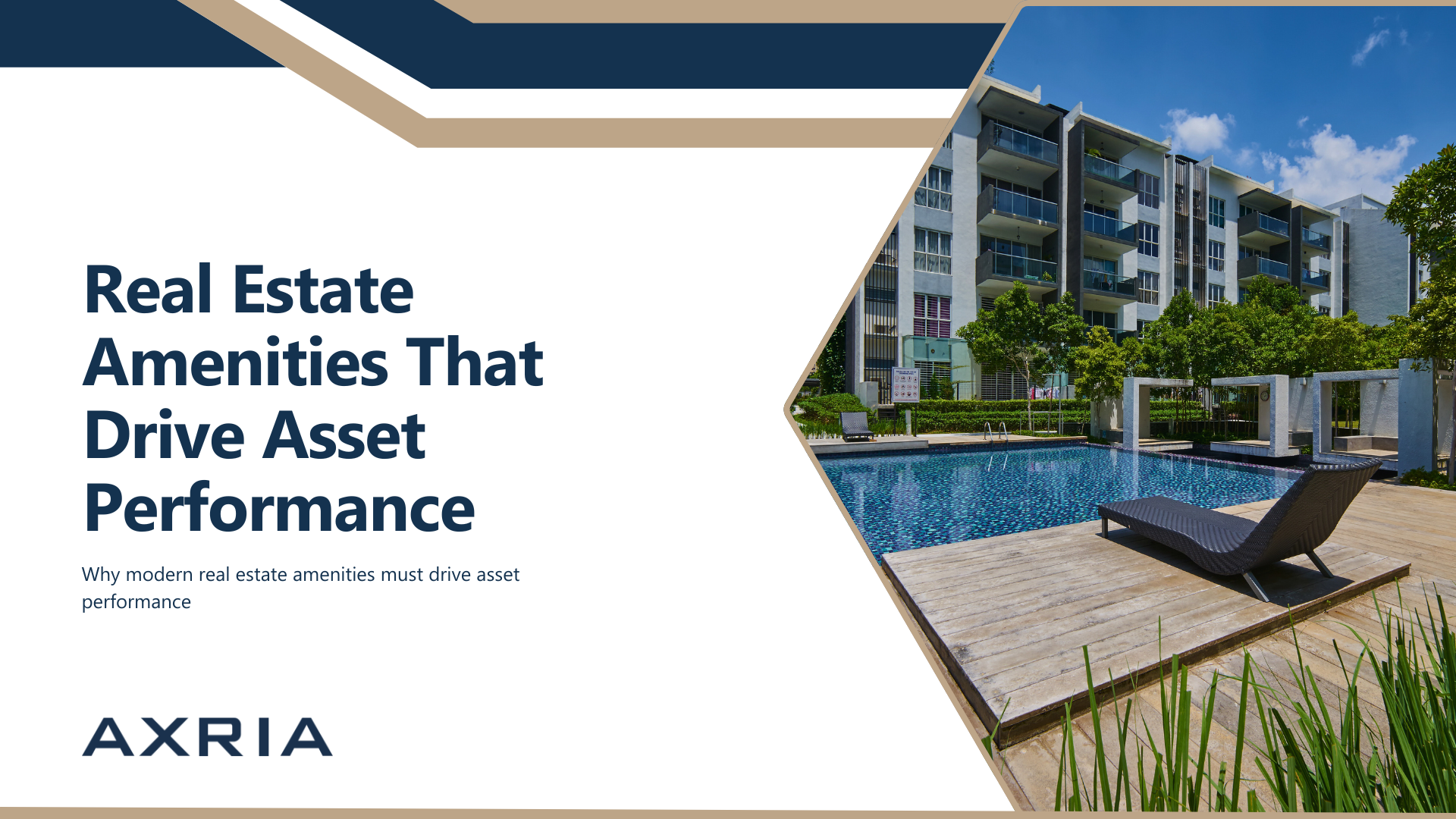
Real estate amenities are no longer just leasing incentives. In today’s capital environment, amenities must support activation, operational efficiency, and long-term asset performance. Here is how thoughtful amenity strategy protects returns.
The Shift in Real Estate Amenities
For years, real estate amenities were designed to win tours and support lease-up.
Large clubhouses. Rooftop lounges. Resort-style pools.
In strong rent growth cycles, these features justified premiums and accelerated absorption. When rents were rising, underused spaces rarely showed up as a problem in underwriting.
That environment has changed.
Rent growth has normalized across many markets. Operating costs remain elevated. Insurance, utilities, and labor expenses continue to pressure margins. In this cycle, real estate amenities must do more than look impressive. They must contribute to asset performance.
Investors are asking a different question.
Not “Does this lease?”
But “Does this perform?”
Activation vs Decoration in Real Estate Amenities
There is a clear distinction between decorative amenities and activated amenities.
Decorative amenities support marketing. They enhance photography and presentation. But usage often declines after stabilization. Over time, these spaces become cost centers.
Activated real estate amenities integrate into daily resident behavior. They are used consistently. They create measurable operational or financial value.
Examples include:
• EV charging infrastructure that generates recurring usage revenue
• Flexible coworking spaces aligned with hybrid work patterns
• Reservable community rooms that support engagement and paid bookings
• Smart parcel systems that reduce staffing pressure
The difference is not luxury versus simplicity. It is functionality versus surface appeal.
In disciplined markets, activated real estate amenities outperform decorative ones.
Monetization Without Overcharging Residents
Monetization does not mean adding fees indiscriminately.
There are three primary ways real estate amenities support financial performance.
1. Direct Revenue
EV charging, premium parking, and reservable workspaces create ancillary income streams.
2. Rent Support
Amenities that are consistently valued strengthen pricing power and reduce concessions.
3. Cost Efficiency
Technology-driven systems reduce operational expenses and staffing needs.
In stabilized assets, margin protection is often as important as rent growth.
According to research published by firms such as CBRE and JLL, operating expense discipline has become a central focus for institutional investors as capital becomes more selective. This reinforces the need for real estate amenities to contribute to long-term efficiency rather than short-term marketing appeal.
Why Institutional Capital Evaluates Amenity ROI
Institutional investors now review:
• Operating expense ratios
• Ancillary income potential
• Utilization rates
• Long-term relevance
Real estate amenities that cannot be justified through usage or income may weaken underwriting assumptions.
This is especially true in development and value-add projects where capital structure and exit assumptions are closely scrutinized.
In selective markets, design decisions influence financing terms and investor confidence.
How Axria Approaches Real Estate Amenities
At Axria, real estate amenities are viewed as part of operating infrastructure.
We begin with a simple question.
How will this space be used on an ordinary weekday?
If the amenity reduces friction in daily routines, supports retention, or strengthens income durability, it strengthens the asset.
If it exists only for brochure appeal, it requires re-evaluation.
This philosophy aligns with our vertically integrated platform, where development, design, and asset management are evaluated together rather than in isolation.
Learn more about our integrated approach on our About page:
https://axria.com/about-us
Our focus across NJ and PA markets is on multifamily and mixed-use projects where fundamentals support long-term stability. Amenity planning is part of that discipline.
The Long-Term View
Real estate amenities no longer exist solely to support leasing velocity.
They influence:
• Expense ratios
• Retention rates
• Ancillary income
• Asset durability
In strong cycles, decorative amenities may survive.
In disciplined cycles, activated amenities create measurable value.
The most effective real estate amenities are not the most elaborate. They are the most useful.
That distinction shapes long-term returns.